
Is it necessary to have a House?
No. Any overhead cover—like the overhang on a shed—gives the nest all the weather protection it needs. Or you can skip the drama and build the protection right in. See the ‘coffee house’ below.”
IN SEARCH OF A BETTER BEE HOUSE
When designing an Orchard Bee House, there are some features that should be kept in mind. The following 2 designs try to maximize exposure to the sun, allow for adding extra nests if desired, create a homing beacon for the bees and allow for maximum ease of mounting the unit.
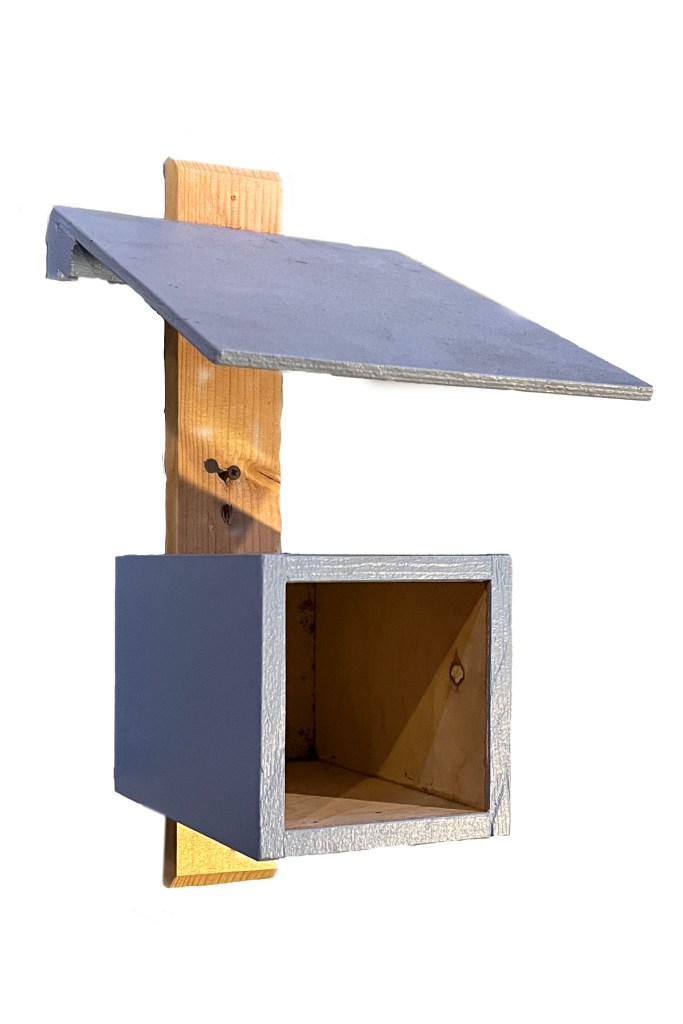
- A back board allows an attaching screw to be placed above or below the roof, and below the house. Screws to hold the roof and house can be mounted from the back of this board.
- The roof is angled to shed water. Its horizontal orientation ensures it never casts unnecessary shade, maintaining full sun exposure across the day.
- Space above the house allows a platform for an extra nest to be added if the main nest fills up. Simply add a nest block to the top of the house and attach it with velcro.
- The solid blue exterior acts as a visual beacon. Mason bees can detect and orient toward this color from long distances, improving their ability to locate the house.
- Similar to the above, a bracket-mounted setup allows the nest box to swivel left or right so you can fine-tune its orientation for maximum morning sun. To anchor it securely, position the house about one inch forward of the back board and fasten it by driving a single screw upward through the underside of the bracket.
The size of the nest box is 6 1/2 inch deep and has a 4×4 inch inside diameter for the box. The depth is fixed, but the inside diameter can be larger making more room for nests. Of course the width of the roof would have to be increased.

I went through many house designs prior to settling on the above as the best single choice. Here are some of those designs.
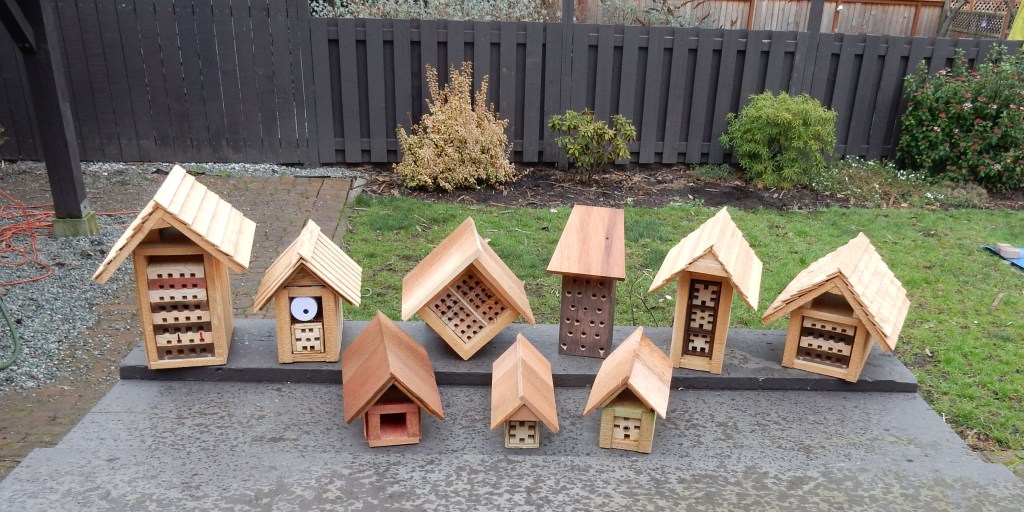
These four houses are all built around 1/2″ ply square boxes with an outside diameter of 5″ x 5″ inches with an inside diameter of 4″ x 4″. This is a convenient size for most nesting materials. The outside of the boxes have 1/16″ strips of cedar attached to provide weather proofing and aesthetic appeal. The roofs are constructed with 1/4″ or 1/2″ plywood covered with 1/16″ cedar strips or corrugated plastic. All wood is given 2 coats of high quality weather proofing finish. Left out all winter they will last years, and taken in for the winter they could last longer than you will. The nests have been left out in this picture because of the variety of types that can be inserted.
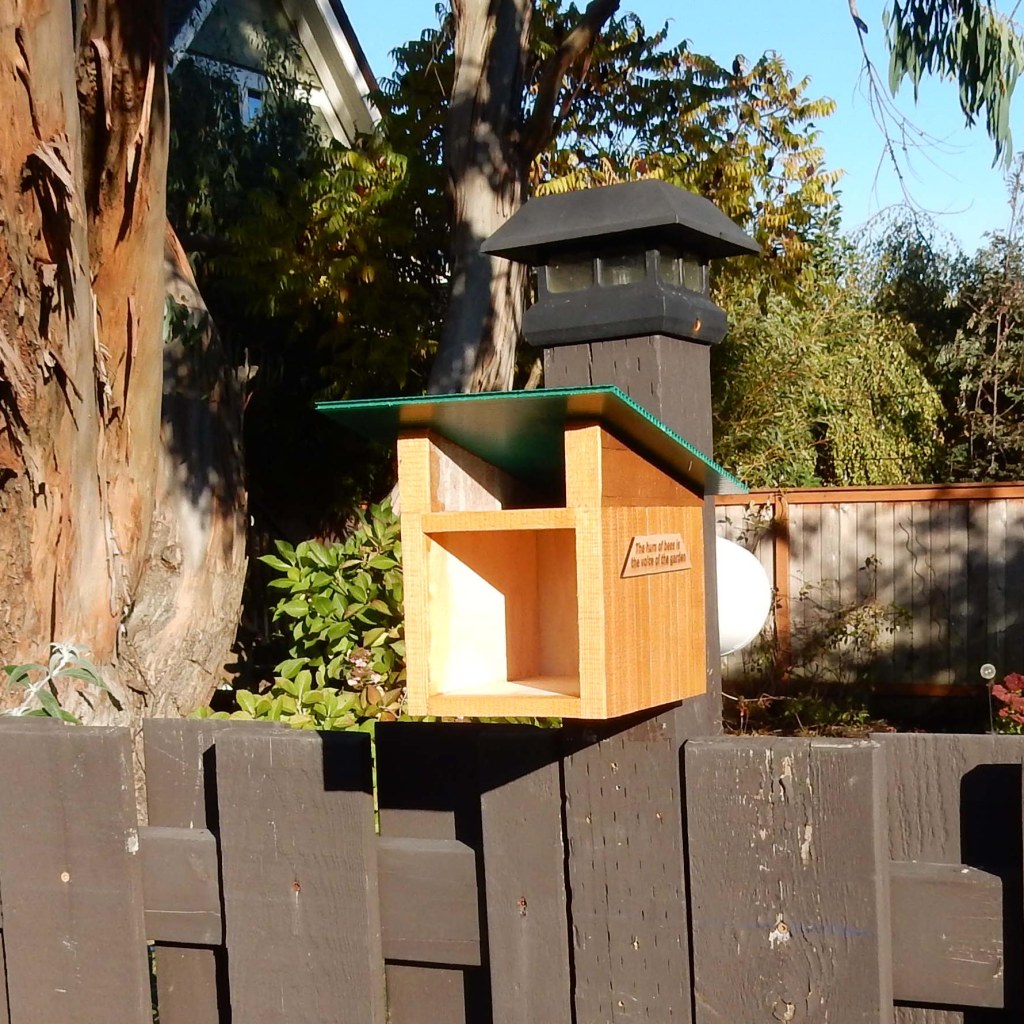
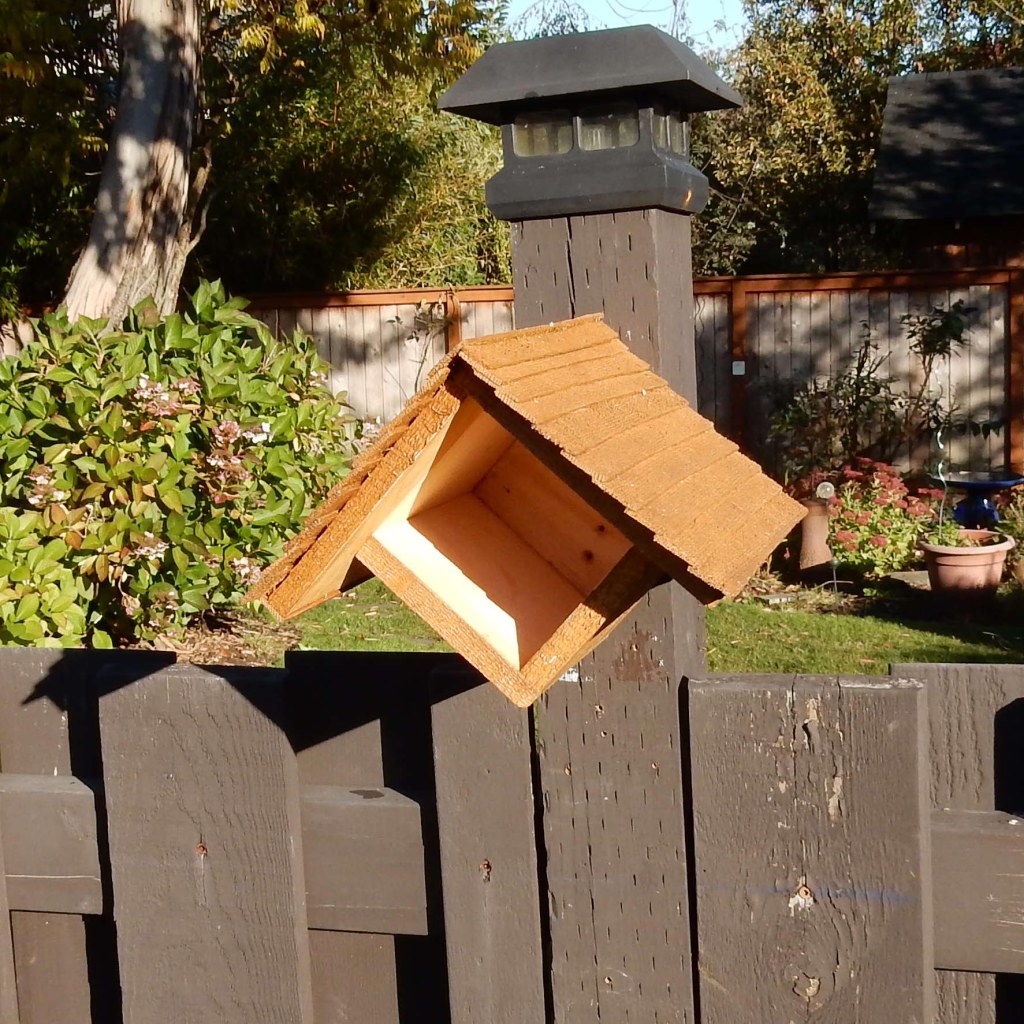

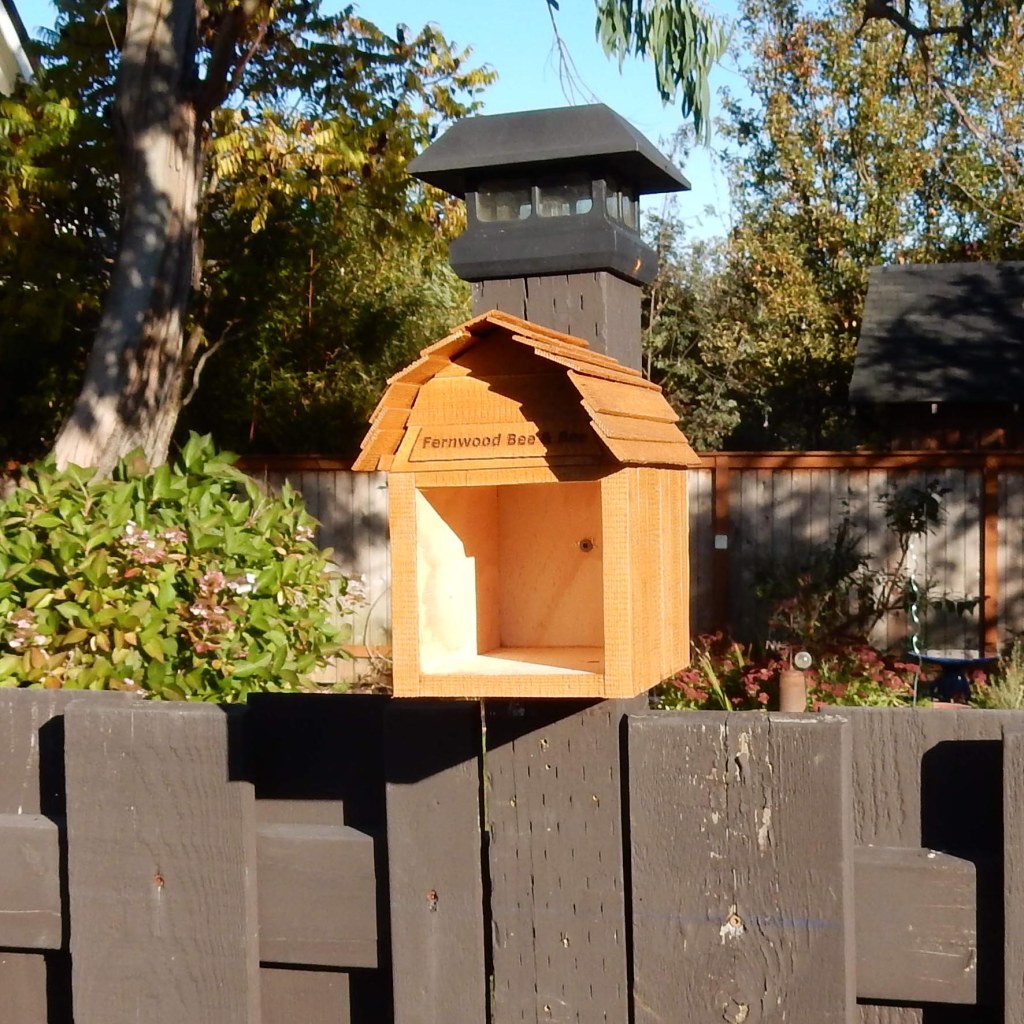
See a video on the above houses when filled with the various nests that can be inserted. As the houses all have the same size opening, the nest types are optional.
Others Bee house models
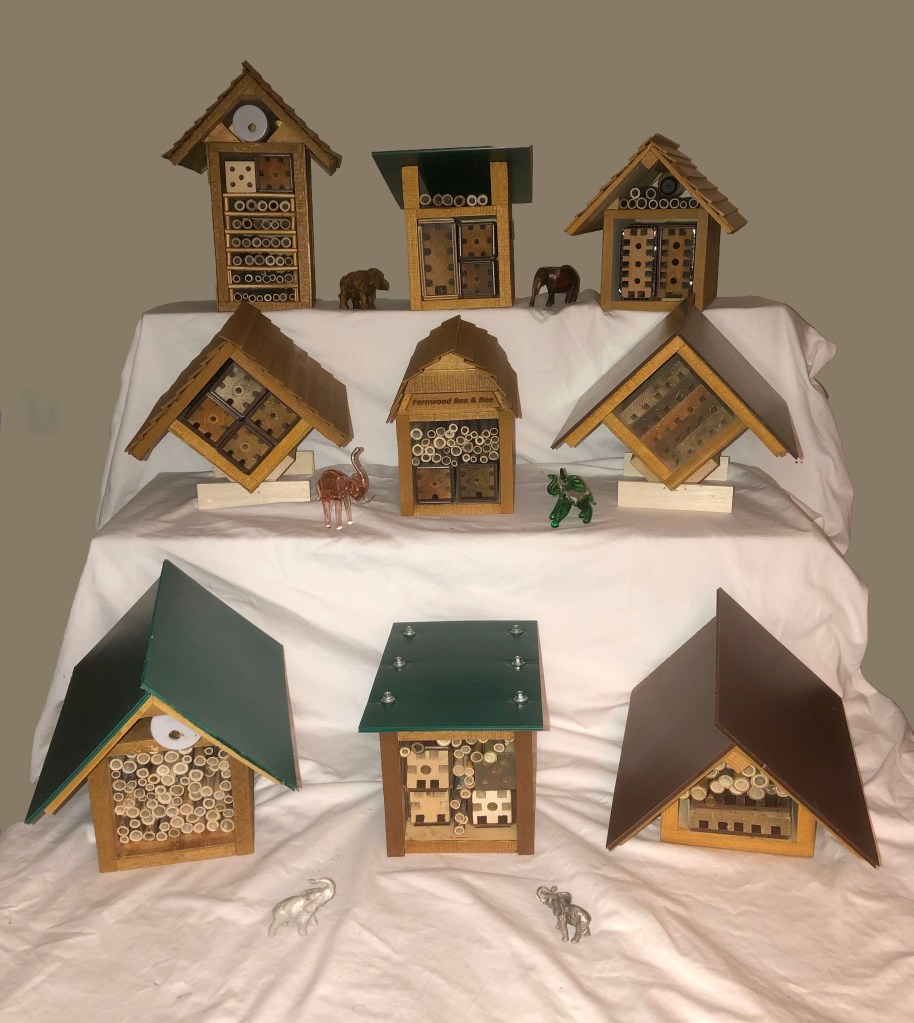
Below: Big Box store Mason Bee Houses. Considered to be a crappy choice due to cleaning and length of nest issues.
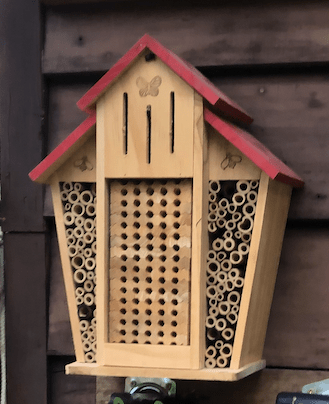
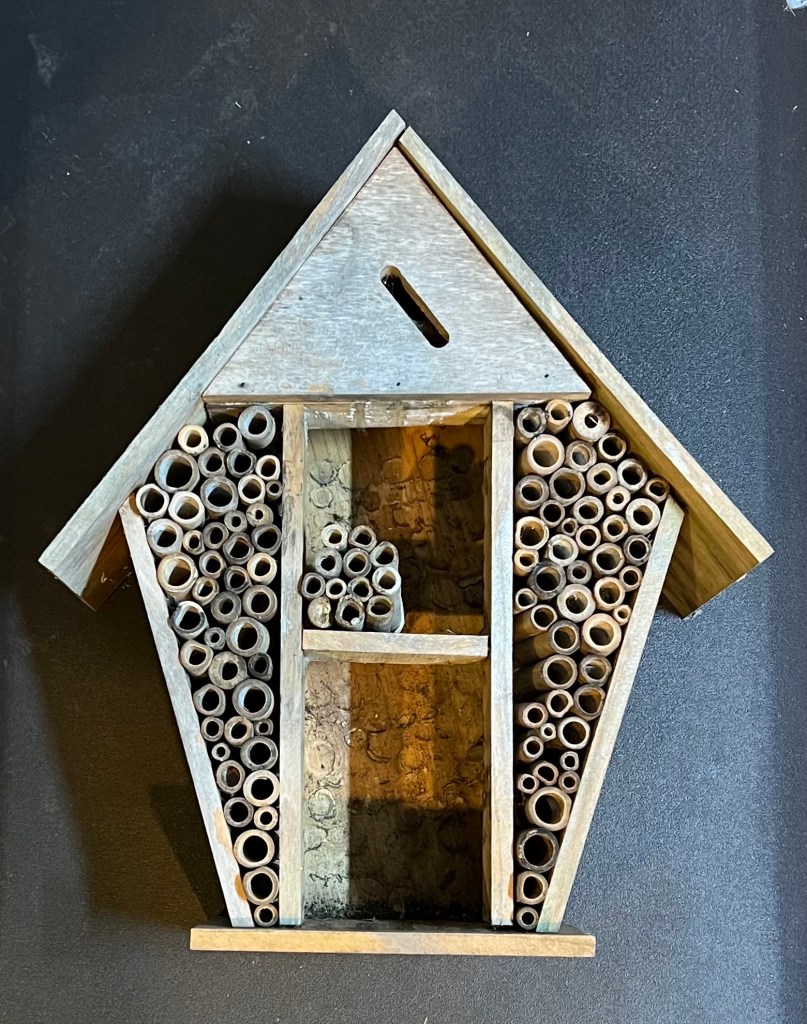
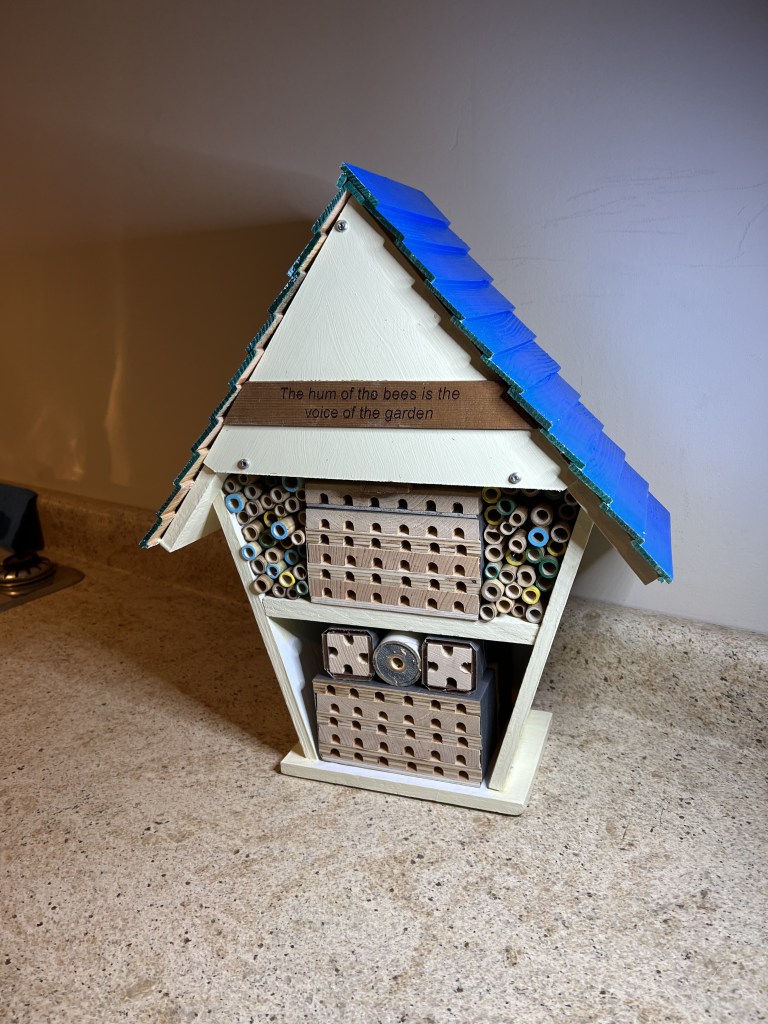
Mason Bee House made for 4″ bamboo lengths. Refurbished with center section replaced with slot nests.
Original 4″ bamboo house. These made poor nests due to the 4″ depth and were made with the idea of not opening the nests each year.
Mason Bee House made for 4″ bamboo lengths. Refurbished with center section replaced with slot nests and side section reduced.
Nests using other containers in the place of a house.
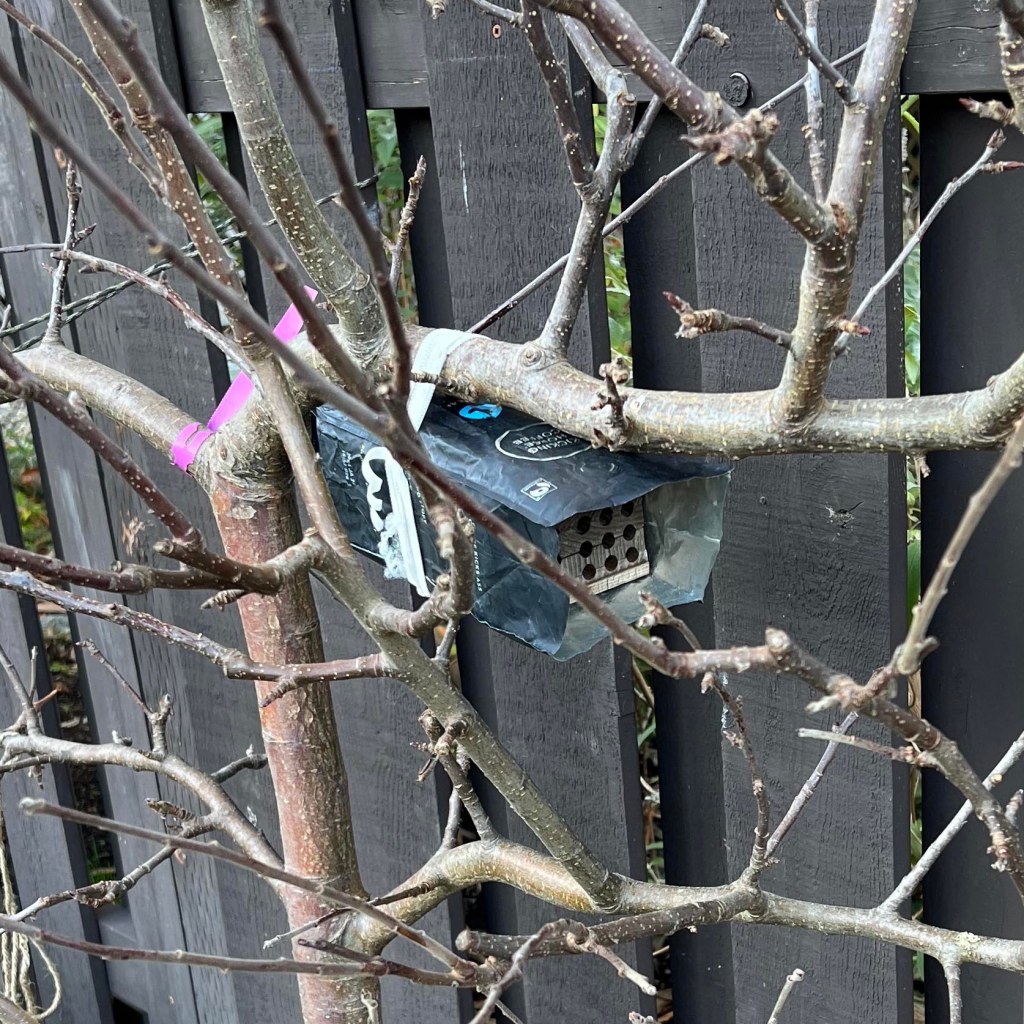
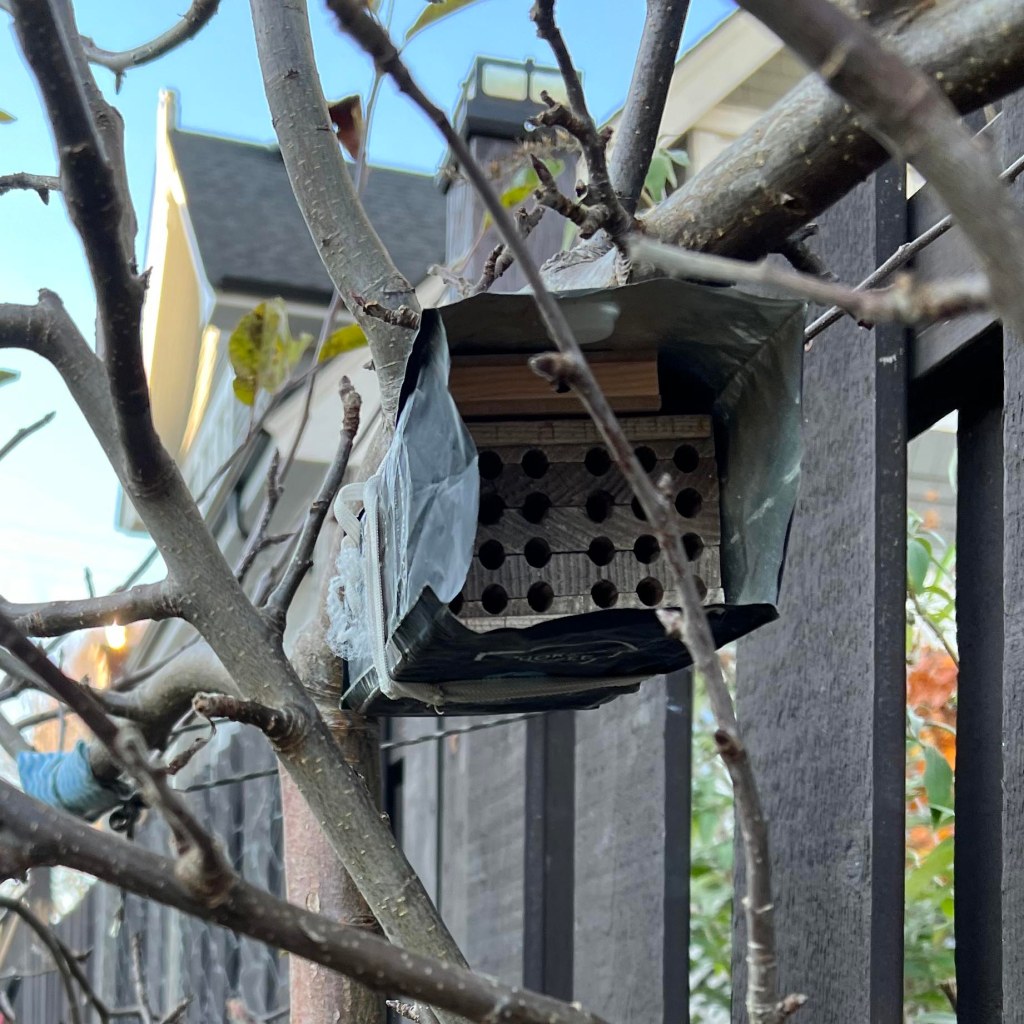
The above “house” is simply an empty coffee bag with a Mason bee nest and release block inserted. The container is water proof and mounted at a downward angle to prevent water being retained. Try to have it facing east to southwest but don’t fret about that. Mount it with zip ties or tape etc. tied around a branch. This “house” fits all the necessary requirements of a good house, that is protection from the elements. And just like that, the bees end up smack in the middle of the tree-blossom buffet.
 My Mason Bees